
Climate Beneficial What the Soil Already Knew: Reflections on Reading Fibershed's Climate Beneficial Cotton Report
Words and Graphics by Afrah Haque, Climate Beneficial Advocate Summer 2026 Intern / Photographs by Paige Green
I did not come into this internship knowing anything about carbon accounting.
I came in with a genuine curiosity about sustainability and a belief that how we make things matters. But the science of measuring carbon — the scopes, the emission factors, the ISO standards — was a world I had never stepped into before. When Nica first handed me the Climate Beneficial Cotton GHG Assessment and asked me to read it line by line, I will be honest. I opened it and felt immediately like I was reading a different language. But as I spent more time with it, I slowly began to learn the acronyms, the numbers, and the terms required to understand what I was seeing. In short, what I soon realized was that this report was a big deal for climate!
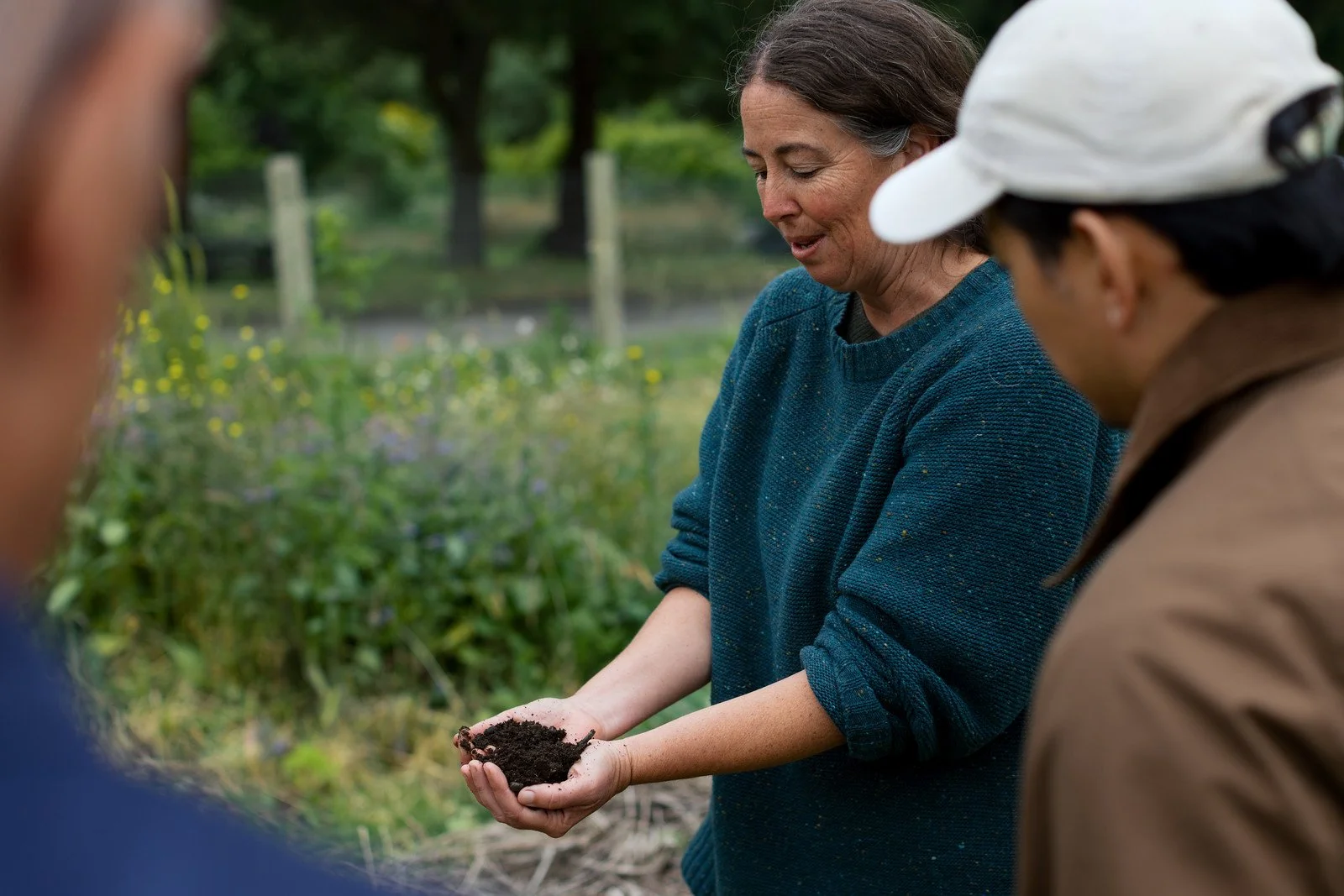
Healthy soil at the Fibershed Learning Center, held by Rebecca Burgess.
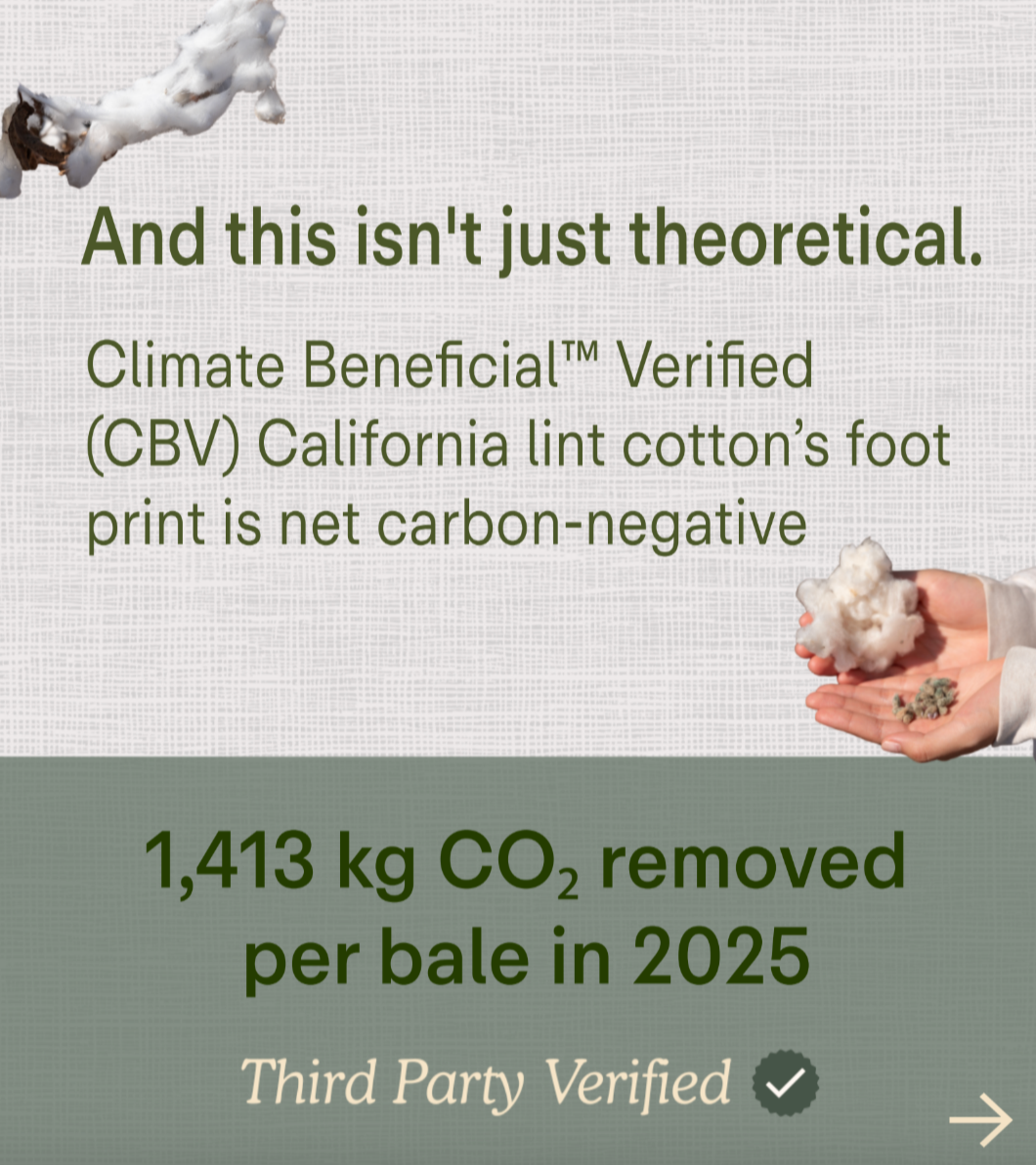
The GHG Assessment, produced in partnership with Carbon Friendly, covers two farms in California's Central Valley across two growing seasons in 2024 and 2025. Both farms are part of Fibershed's Climate Beneficial Verification program.. The headline finding is that Fibershed's California Climate Beneficial Verified cotton is net carbon negative. That means that it removes more carbon from the atmosphere than it creates. In 2025, the program produced cotton at 243 kg of CO2 per bale, which is already 36% better than the US average of 377 kg per bale. But once you factor in how much carbon the soil absorbed through regenerative practices, that number does not just go down. It flips entirely. Negative 1,413 kg CO2e per bale. That is remarkable news. But what does it mean exactly?
My job was to create a glossary, a legend document that translated every technical term in the report into plain language that anyone could understand — a huge step toward making all those numbers explicable to a wider audience. The glossary ended up comprising fifty terms in total, each one defined three ways: the technical phrase from the report, the standard scientific definition, and a plain-language explanation written the way you would explain it to a friend who had never heard any of this before.
It is a different kind of reading, going through a report with that purpose. You cannot skim. You cannot let a term blur past you and assume you understand it. You have to stop at every unfamiliar phrase and actually reckon with it. What does cradle to farm gate really mean? Why does the project boundary — where the measurement starts and stops — matter so much? What is the difference between gross emissions intensity and net emissions intensity, and why does that difference change everything about what the numbers are actually saying? Doing that work taught me something about how scientific communication fails people. If you do not already know what an emission factor is, it would be hard to understand the significance of Fibershed having a third-party verified one.
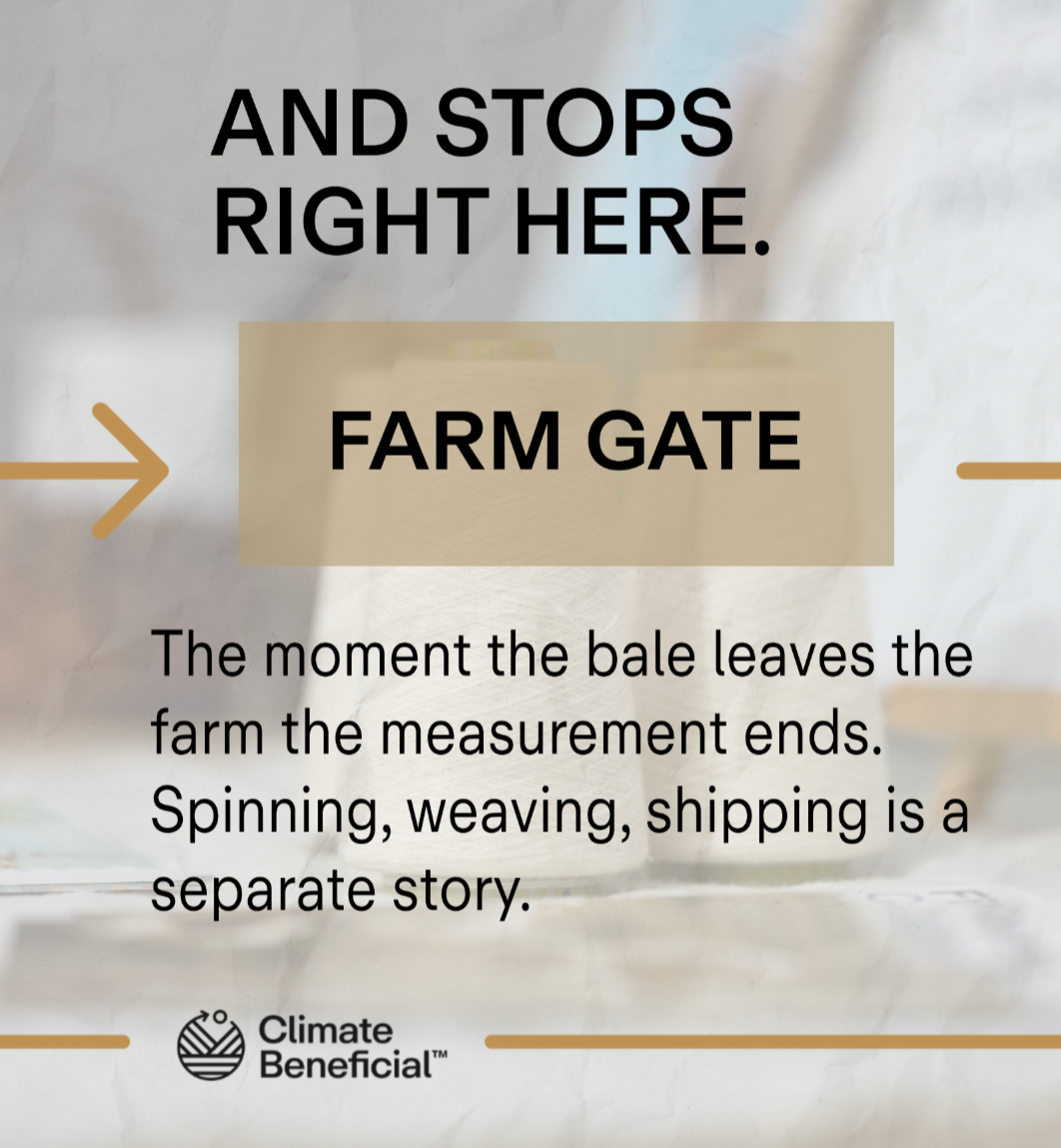
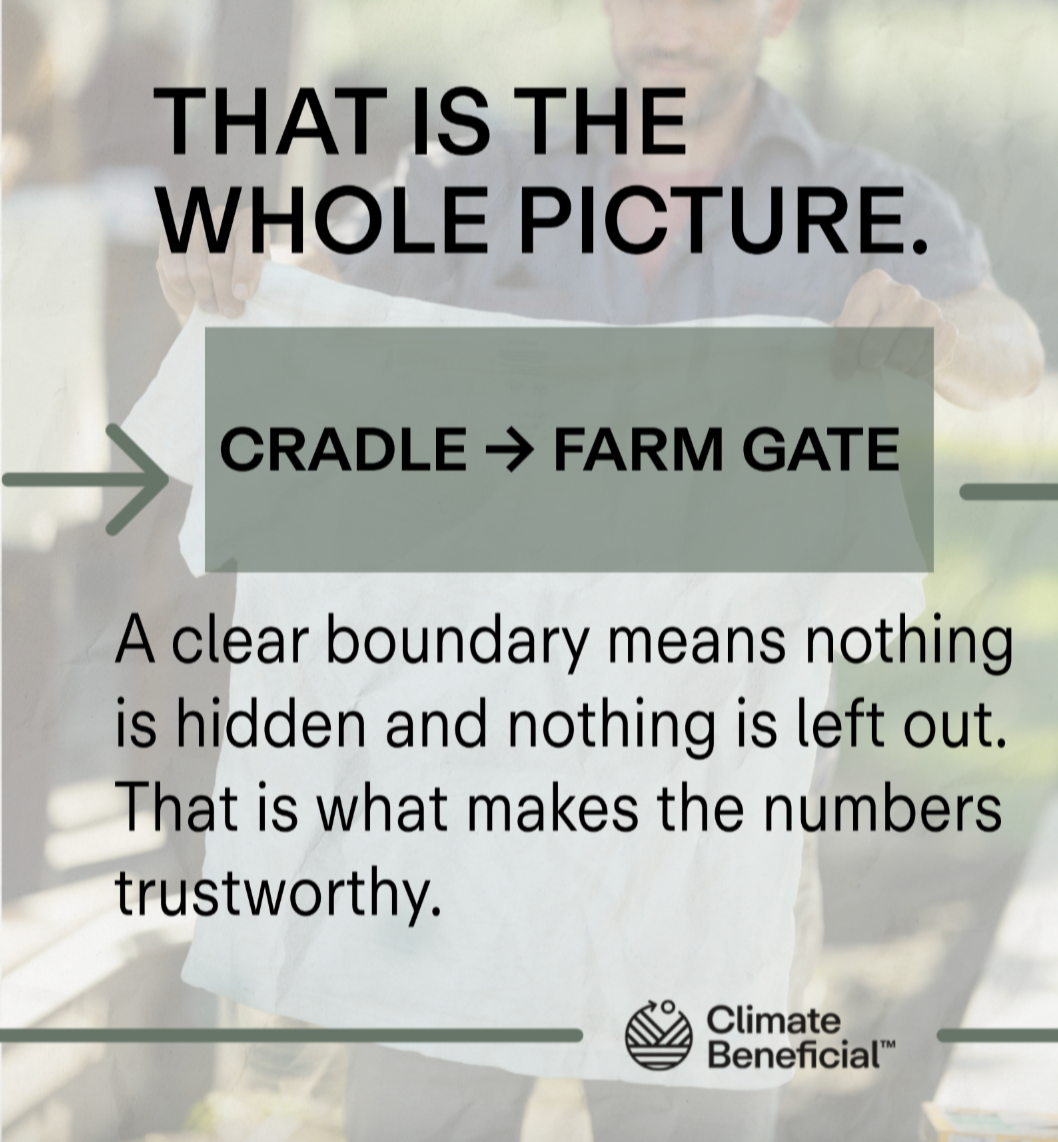
When I first started learning about regenerative farming, I thought about what I could see. The cover crops grow between seasons. The tractors run on less fuel. The hedgerows planted along field borders. I assumed the most visible practices were the most impactful ones. But the report showed me how real work is happening underground.
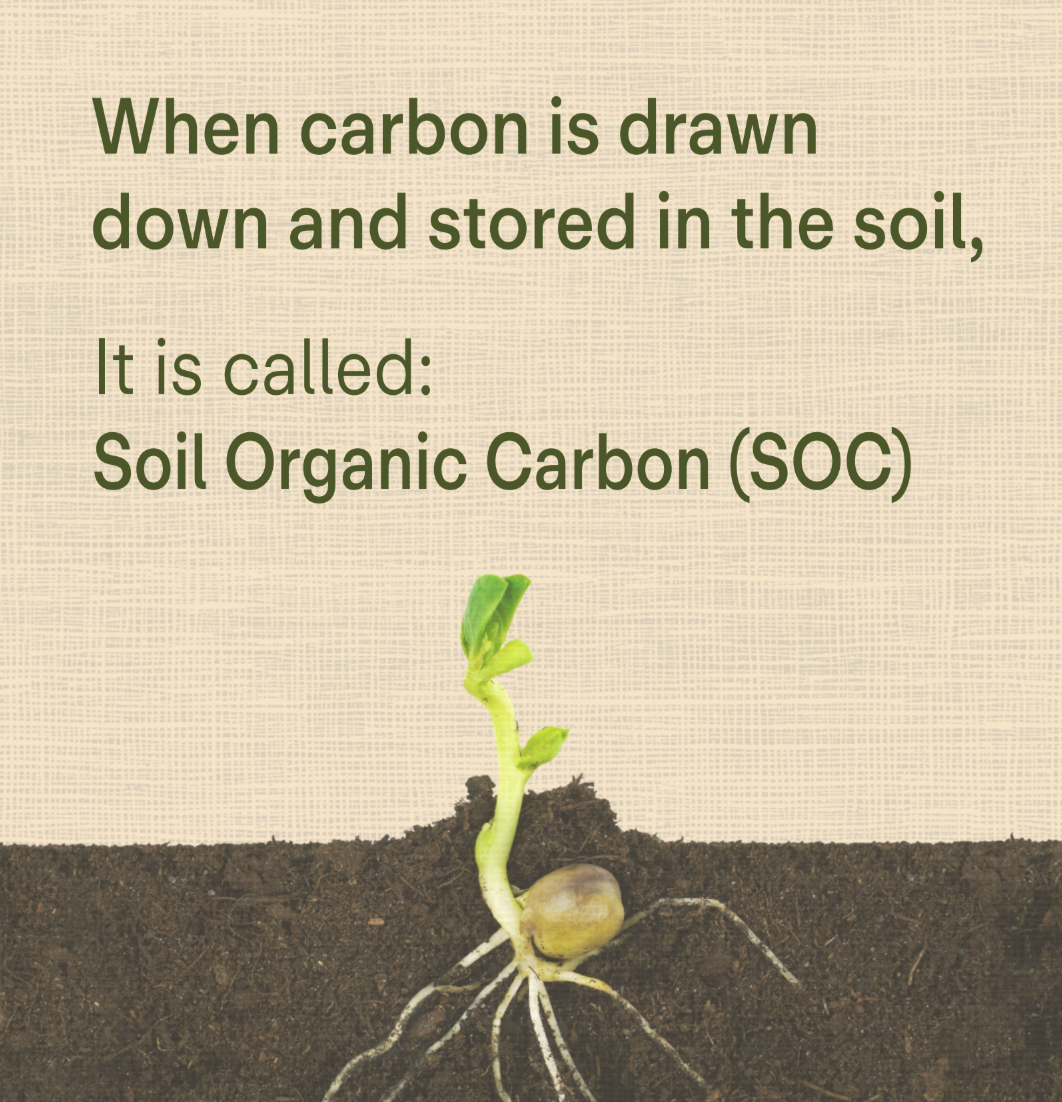
It turns out, the most transformative thing a regenerative farm does is build soil organic carbon, which is the carbon stored in the soil as decomposed organic matter. You cannot see it. You cannot photograph it easily. But it is doing the heaviest lifting of all. At Bowles Farming Company, soil carbon went from 16.5 to 34.5 tonnes of carbon per hectare between 2021 and 2025. It doubled! The results were so consistent over time that scientists confirmed they were statistically significant, meaning real and not coincidental. This impact was possible because the farmers implemented Climate Beneficial practices every single year, spreading compost, planting cover crops, reducing how much they tilled the soil, and cutting back on synthetic fertilizer year after year.
There is a reason Fibershed commissioned this report, and it is not just about documenting what is happening on two farms in the Central Valley. It is about creating a tool that changes how regenerative agriculture gets valued in a supply chain. Many major clothing brands have publicly committed to reducing their Scope 3 emissions — the carbon that lives throughout their supply chains, including the cotton they source — by 2030. That deadline is approaching, and many are struggling to figure out how to get there. The challenge many face is finding the data. Measuring and proving Scope 3 progress requires the kind of verified, auditable primary data that most cotton suppliers simply cannot provide. Fibershed's Climate Beneficial Verified cotton can now provide it. Negative 1,413 kg CO2e per bale. Third-party verified. ISO compliant. Ready to be used directly in a brand's Scope 3 reporting.
I came into this assignment as a design student who cares about sustainability. I am leaving it as someone who understands in a concrete and specific way what it actually takes to prove that what you are doing works. It takes measurement. It takes consistency. It takes growers like Cannon and Derek at Bowles and Gino Pedretti at Pedretti ranches committing to these practices season after season. And it takes organizations like Fibershed doing the painstaking work of connecting those farm-level decisions to the language that brands, markets, and regulators actually speak.
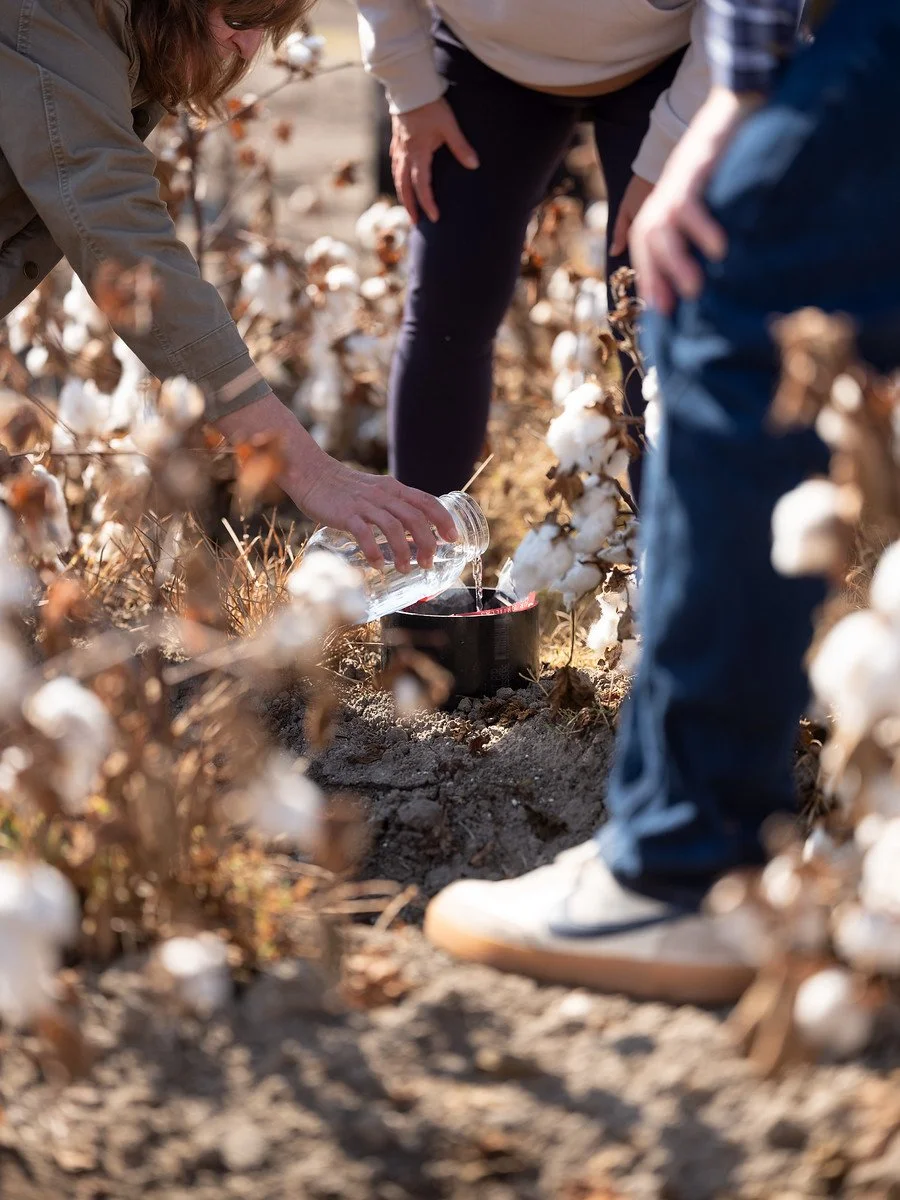
Water-holding capacity demonstration at Bowles Farming Company at 2025 Farm Tour
I also came away with a much deeper appreciation for what healthy soil actually means. Healthy soil is something physical and measurable and alive. Soil that holds water instead of letting it run off. Soil that doubles its carbon content over four years of consistent care. Soil that is doing more climate work than most people will ever know it is doing.
The measurements at Bowles Farming Company began in 2021. This report came out in 2025. That means it took four years of work before there was data to justify it. To me, that’s what “regenerative” really means. It’s a commitment to a timeframe longer than a single season, a single report, or a single brand's sourcing cycle. The soil does not respond to urgency. It responds to consistency. And the growers and the organizations and the interns — like me— making glossaries are all, in our own way, learning to work on that same clock.